Thursday, 22 July 2010

Summer eating in Spain

Spain is no place for a vegetarian.


Or a teetotaller.


The day starts agreeably late, with chocolate con churros: freshly made, lightly fried doughnutty strips, to be dunked in dense, dark drinking chocolate the consistency of swamp mud - the latter in espresso-sized coffee cups, presumably to reduce the chances of keeling over and dying of a combined caffeine, sugar and fat overdose ... the perfect breakfast. (Note: un hombre churro = a hottie!)


Summer lunches are leisurely, at outdoor cafes under the shade of umbrellas


or under trees in a leafy square with a fountain.


Shall we go sophisticated ...


or simple and rustic?


Solo is fine ...


or even while reading books companionably.


Sometimes we stayed home where Nich worked on perfecting the ultimate gazpacho (recipe to follow), in the shaded inner courtyard (absolutely my top favourite design feature of the Spanish house), with chilled sangria and white wine.


Siesta time is a serious business. Shops close from 2.00 to 6 or 7.00 pm; the streets empty. By 8.00pm-ish, with the edge off the heat, the bars and restaurants are just starting to prepare for dinner...


... crisp white cloths and menus ready...


... maybe a spectacular view thrown in for free ...


What's on the menu?


We could tapear (yes, that is an actual verb, to eat tapas) with garlic and tomato soup


gambas a la plancha ( grilled prawns)


crisp-fried aubergines in sweet balsamic glaze


pimientos asados (roasted sweet peppers).


Specialities of the region in Andalucia would be: rabo de toro (ox-tail)


sea bass


or a hearty seafood paella.


And walking home around 11 or 12.00 pm on any night of the week, the restaurants and bars are crowded still with families and their small children - drinking, eating, talking or doing the paseo, the evening stroll.


At Restaurante Pedro Romero in Ronda, Plaza de Toros, with our friend Amanda from London.

Tuesday, 20 July 2010

Magic of the Alhambra

Our day started before dawn yesterday, with a two and a half hour drive to Granada. On a hilltop under the Sierra Nevada (incredibly, snow-capped despite 40 degree heat in the city below), and hidden in a forest of elms, are the palace, fortress, mosque and gardens of the Alhambra...


... built in the 13th and 14th centuries by the Sultans of the ruling Nasrid dynasty. Their aim - to create a physical realisation of the descriptions of Paradise in Islamic poetry ...


(Gardens of the Generalife, planted by the Moors with roses, oranges and myrtle)


They knew a thing or two about designing with space, light, water and nature, those Moors ...


"Only Allah is victorious" reads the inscription above. I guess this meant nothing to the illiterate Christian reconquistadores who were already advancing as the Alhambra was being built, about to start on a brutal repression of both Muslims and Jews and their cultures.


View of old Granada from Alhambra Palace.

Thursday, 15 July 2010

Sevilla

My childhood memories of Seville were: orange trees, whitewashed walls, Moorish mosaic tiles and shady inner courtyards with fountains. It was all just so yesterday.


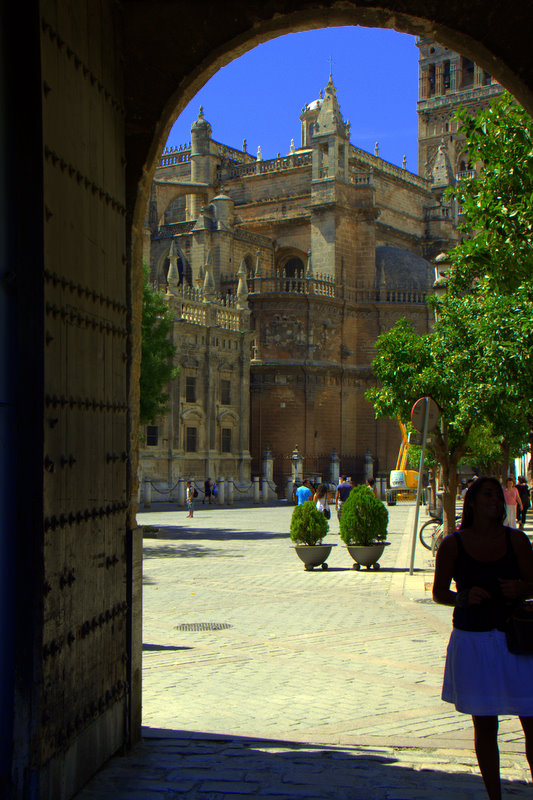
The cathedral, which started life as a mosque in the 12th century, only to be rebuilt by the Reconquista christians as the largest Gothic cathedral in the world (only the orange-tree courtyard and the minaret/belltower you can see above remain of the original). Columbus lies inside.


Nearby is the entrance to the Alcazar, Moorish palace. (Queen Isabella debriefed Columbus here after his New World discoveries)...


And from Islam it's only a few steps along to the old Jewish Quarter, Barrio Santa Cruz.


... famous for its narrow Kissing Lanes ...


Murillo is buried somewhere under the bricks here, his tomb lost.


Dinner and a glass of wine in Santa Cruz ...


Finally the sun is setting around 10pm, the streets emptied out now as it's dinner hour in Spain ...


Related Posts with Thumbnails